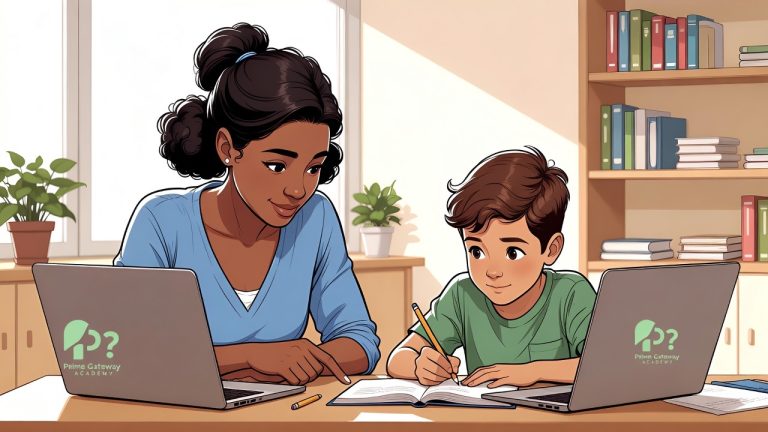


Behind every classroom door is a carefully balanced ecosystem. Lesson plans, learning objectives, time limits, emotional dynamics, and individual student needs are all in play at once. Teachers live inside this system every day. Parents, understandably, only see parts of it—usually through homework, grades, and brief feedback.
This article opens a gentle window into the teacher’s perspective, not to defend the school, but to help parents and teachers work as true partners in a child’s learning journey, just as Prime Gateway Academy believes education should be.
1. Curriculum Is a Journey, Not a Sprint
Teachers don’t teach topics in isolation. Each lesson is part of a carefully sequenced curriculum designed to build skills step by step. When a class moves on from a topic, it doesn’t mean every child has mastered it perfectly. It means the foundation has been laid, and future lessons will reinforce it.
What teachers wish parents understood is that pacing is a professional responsibility. Staying too long on one concept can stall the entire class; moving forward allows understanding to deepen over time. Learning often clicks later, not immediately.
When parents panic at the first sign of difficulty, children may absorb anxiety instead of confidence. Patience communicates trust—in the process, the teacher, and the child.
2. One Classroom, Many Learners
In every classroom, there are fast thinkers, careful processors, creative explorers, quiet observers, and energetic questioners. Teachers constantly adjust instruction to meet these differences, often within the same lesson.
Some children need encouragement and time. Others need challenge and stretch. Treating all children the same would be unfair—and ineffective.
Teachers rarely say this out loud, but it matters: comparison is the enemy of growth. When parents compare siblings, classmates, or past generations, children may feel pressure instead of motivation. Growth happens fastest when a child is measured against their own progress, not someone else’s highlight reel.
3. Assessments Are Signals, Not Labels
Tests, quizzes, and assignments are tools, not judgments. They help teachers understand what a child knows, where gaps exist, and how instruction should adjust.
A lower score is not a verdict on intelligence or effort. Often, it’s a snapshot of timing, confidence, or understanding on that particular day.
Teachers hope parents will ask:
- “What skill is this showing?”
- “What support does my child need next?”
- “How can we work together on this?”
When grades are treated as information rather than identity, children stay curious instead of defensive.
4. Feedback Is Carefully Chosen
When a teacher gives feedback, every word is weighed. Teachers aim to be honest without discouraging, firm without shaming, and clear without overwhelming.
Sometimes feedback sounds mild because it’s meant to encourage consistency, not alarm. Other times it may sound serious because early intervention matters.
What teachers quietly wish is that parents would read feedback as an invitation to collaborate, not a complaint or accusation. Defensive reactions—though natural—can shut down the very support a child needs most.
5. Support Is Powerful—But Overhelping Can Hurt
Teachers deeply value parental involvement. But there is a difference between supporting learning and taking ownership of it.
When homework is corrected too heavily, rewritten by adults, or rushed to perfection, teachers lose the ability to see how a child is truly thinking. Mistakes are data. Struggle is part of learning.
Children grow confidence when they know it’s safe to try, fail, and try again—with adults guiding, not rescuing.
6. Teachers and Parents Want the Same Thing
This may be the most important truth teachers rarely say aloud: teachers are on your child’s side.
They want students to succeed academically, grow emotionally, build character, and develop a lifelong love for learning. At Prime Gateway Academy, this shared goal is central to the school’s mission—to nurture well-rounded learners through strong values, excellence, and partnership.
When parents and teachers trust each other, children feel secure. When children feel secure, learning accelerates.
Moving Forward Together
Education works best when school and home speak the same language: encouragement, patience, structure, and high expectations balanced with care.
By understanding the teacher’s perspective, parents become not just supporters of their child, but collaborators in the learning process—opening a true gateway to growth.
At Prime Gateway Academy, this partnership is not optional. It is the foundation.
At Prime Gateway Academy, we believe that great education is built on strong partnerships between school and home.
We invite parents to stay engaged, communicate openly, and work closely with our teachers as we nurture confident, curious, and capable learners together. When we align our efforts, every child thrives.