
For many parents, a report card triggers an emotional reflex. High grades bring relief. Low grades bring worry. Average grades bring confusion.
But educators see something very different.
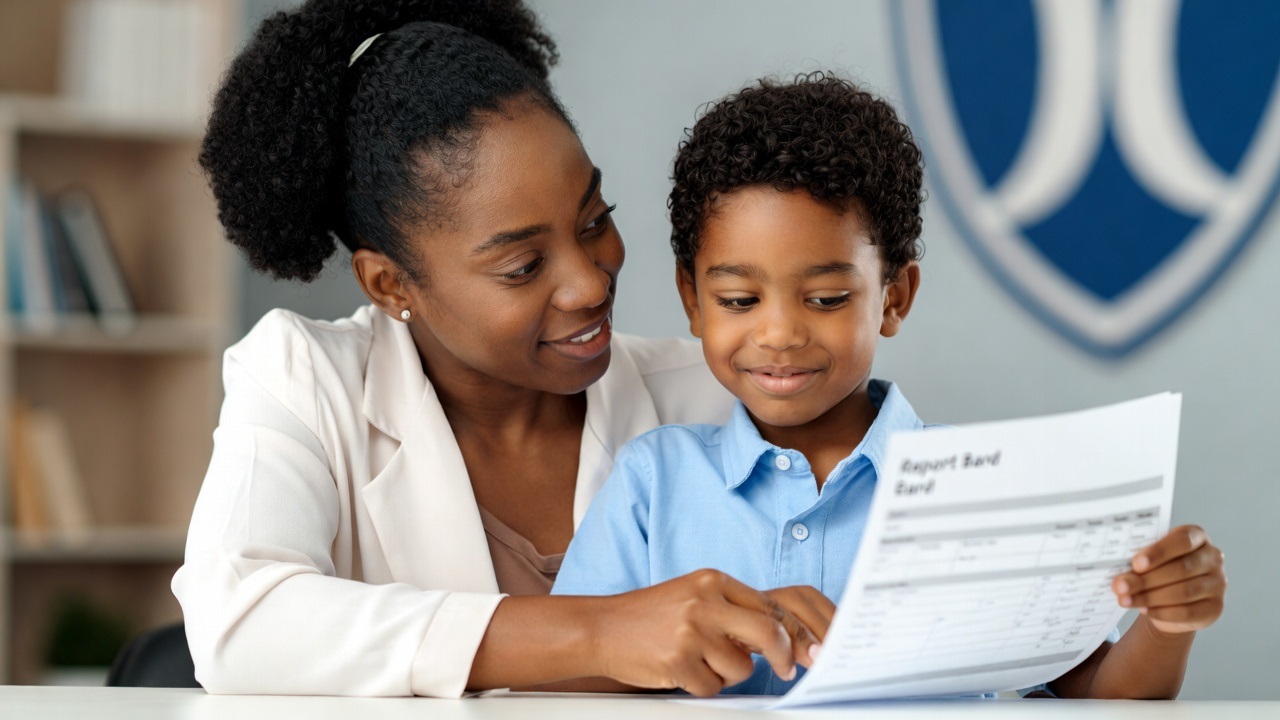
To a teacher, a report card is not a verdict on a child’s intelligence or future. It is a diagnostic tool—a snapshot of learning patterns, effort, growth, and areas that need support. When parents learn to read report cards the same way educators do, conversations at home change, confidence improves, and learning accelerates.
Grades are signals, not sentences. Let’s decode them.
1. Grades Tell What, Not Why
A score or letter grade shows current performance, not the reason behind it. Two children can earn the same grade for entirely different reasons:
- One may understand the material but rush through work.
- Another may work very hard but struggle with foundational concepts.
- A third may be capable but distracted or unmotivated.
Educators never stop at the grade. They ask why the grade looks the way it does. Parents who do the same avoid jumping to conclusions and instead open the door to meaningful support.
2. Comments Matter More Than Numbers
The most valuable part of any report card is often the teacher’s comments. This is where learning behaviors reveal themselves:
- Attention and focus
- Participation in class
- Confidence in asking questions
- Consistency with assignments
- Ability to work independently or collaboratively
These observations explain the story behind the grade. When parents focus only on scores, they miss the roadmap teachers are providing.
A single sentence like “Shows improvement but needs more consistency” can be more important than five extra marks.
3. Understanding Effort, Ability, and Progress
Educators carefully separate three things that parents often mix together:
- Ability – what a child is capable of understanding
- Effort – how much energy and focus the child applies
- Progress – how far the child has moved from their starting point
A child with average grades but strong progress is often learning more deeply than a child with high grades and no growth. Progress is the quiet hero of education, and it deserves recognition at home.
When parents praise effort and improvement—not just results—children develop resilience and a healthy relationship with learning.
4. Behavior Notes Are Learning Signals
Behavior remarks are not moral judgments. They are learning indicators.
Issues like restlessness, incomplete work, or poor concentration often point to unmet needs: fatigue, lack of structure at home, emotional stress, or gaps in understanding. Likewise, positive behavior notes—leadership, curiosity, cooperation—highlight strengths that should be encouraged beyond the classroom.
Educators read behavior notes as clues. Parents should too.
5. Spotting Learning Patterns Over Time
One report card is a moment. Multiple report cards show a pattern.
Is a subject consistently improving?
Does performance dip at certain times of the term?
Is there a recurring comment across subjects?
Teachers look for patterns because patterns reveal strategy. Parents who track patterns can partner with the school more effectively instead of reacting emotionally to isolated results.
6. Partnering With Teachers Without Discouraging the Child
Children thrive when home and school speak the same language.
Instead of confronting teachers or pressuring children, educators recommend these approaches:
- Ask questions, not accusations
- Share observations from home
- Focus on solutions, not blame
- Involve the child in goal-setting
When children see parents and teachers working together calmly, learning becomes a shared mission—not a battlefield.
7. Turning Report Cards Into Growth Conversations
A report card should not end with punishment or comparison. It should begin a conversation:
- What are you proud of this term?
- What felt difficult?
- What can we do differently next term?
This shifts the focus from fear to ownership. Children who reflect on their learning become active participants in their education.
A Message From Prime Gateway Academy
At Prime Gateway Academy, we believe education is a partnership—between school, parents, and child. Our mission is not just to produce excellent results, but to raise confident, curious, and capable learners prepared for life.
Report cards are one of the bridges in that partnership. When parents learn to read them with understanding and empathy, children feel supported rather than judged—and learning flourishes.
Together, we move beyond grades and toward growth.
Partner with Prime Gateway Academy today.
Attend parent–teacher meetings, engage with feedback, and join us in shaping not just academic success, but strong character, critical thinking, and lifelong learning in every child.
Because when school and home walk together, children go further.